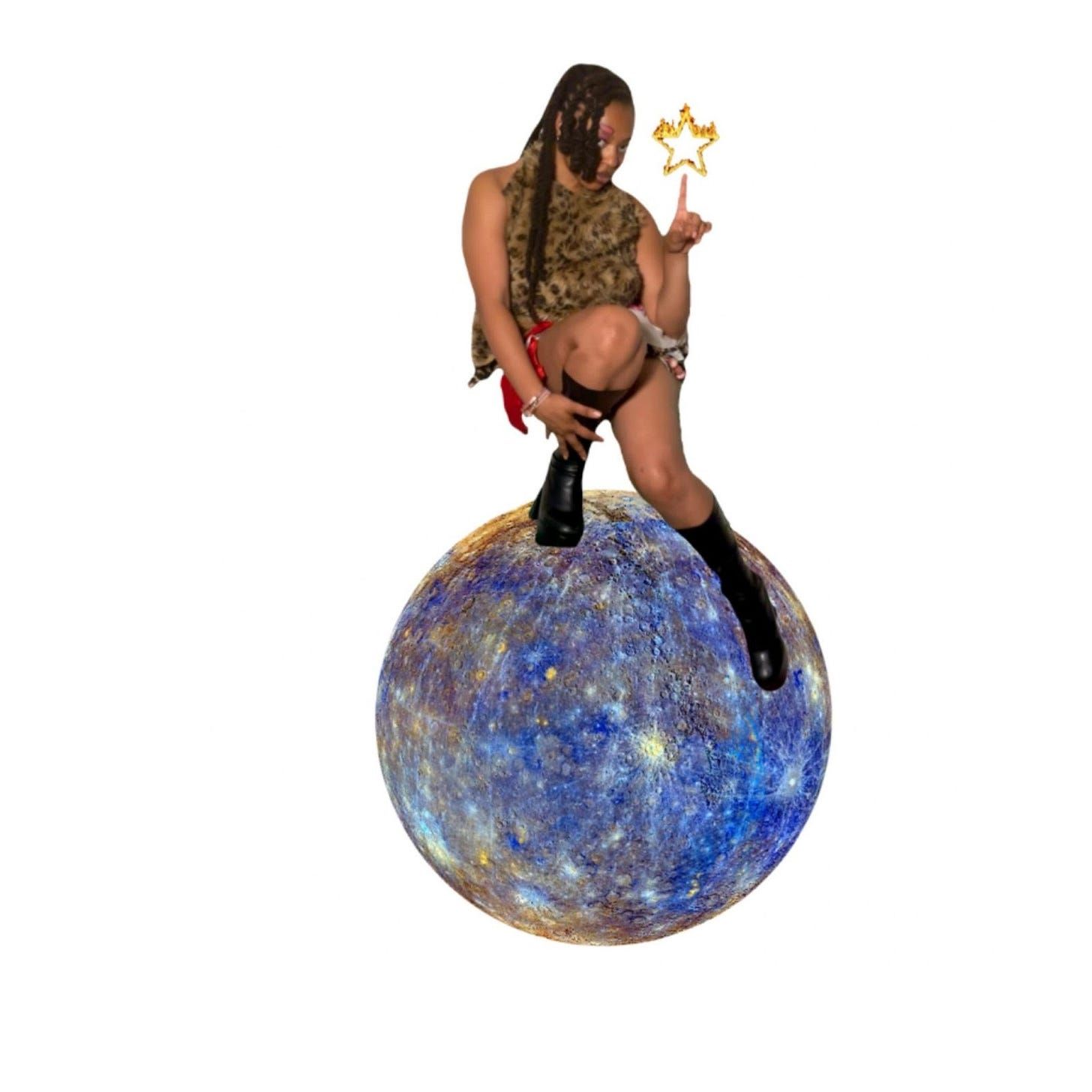
Fanned Out: Chronicles of Black Fangirl
I am a fangirl. Am I a 27-year-old married woman? Yes. But I will always be a fangirl.
In September, Harry Styles penned an email that both invigorated and frightened fans worldwide. Good news: he added more dates and cities to his tour, Together, Together. Bad news: the cryptic message led fans to speculate that he will be retiring or taking a hiatus in the near future ( a nightmare that I somehow survived in 2015). Worse news: I have yet to secure tickets. “I don’t know what comes next for me, but I’m excited to find out”, Styles said. Vague, yet intriguing, Mr. Styles- well played.
Being faced with whispers of his potential retirement forced me to recognize the bittersweet reality that my fangirl fantasy was in danger. The comfort that I have been leaning on for nearly two decades was threatened. Not by anything tragic or malicious, but by time. I go back to the beginning. How did I get here?
In 2011, my world changed. Five teenage boys grouped together by chance and held together by fringe haircuts; One Direction was born. When I heard the iconic “bum- bum- bum-” guitar intro on What Makes You Beautiful for the first time, I was attending a friend’s 12th birthday party. Each girl’s ears perked up in unison, and so it began. “I love Harry!” “Zayn is my husband”, “I think Niall is Irish!”. All of my peers were experts, already singing each word without missing a note and daydreaming together. I didn’t even have a Tumblr account. I was intrigued but unwilling to show my ignorance on the subject. I played it off, and that night in my bed under the glow of the blue light, I learned for myself what all the hype was about.
As a Black child in a predominantly white institution (PWI), I made a lot of decisions based on survival. How I dressed, talked, styled my hair, and the music I listened to was constantly under surveillance. My Blackness positioned me to regularly be on the receiving end of microaggressive or covert racism. I went by a nickname because Yasmeen was “too difficult” for others to say. My teachers would stop lessons because my hair was “too distracting” to other students, so I learned quickly that assimilation meant safety. Adolescence comes with a host of its own challenges, but it is especially difficult to navigate the social hierarchy of middle school with the added pressure of visually being an “other”.
My journey down the One Direction rabbit hole started as an attempt at social survival but rapidly evolved into my saving grace. Like millions of tweens, I was struck by the infectious melodies, the video diaries, and of course the Louis Tomlinson of it all. I memorized the lyrics. I read fanfiction. I begged my parents to buy me the posters (they didn’t, so I had to make do with whatever magazine cutouts I could scrounge up). The void built from years of assimilation and social isolation from my peers was overflowing with romanticized lyrics and manufactured smiles.
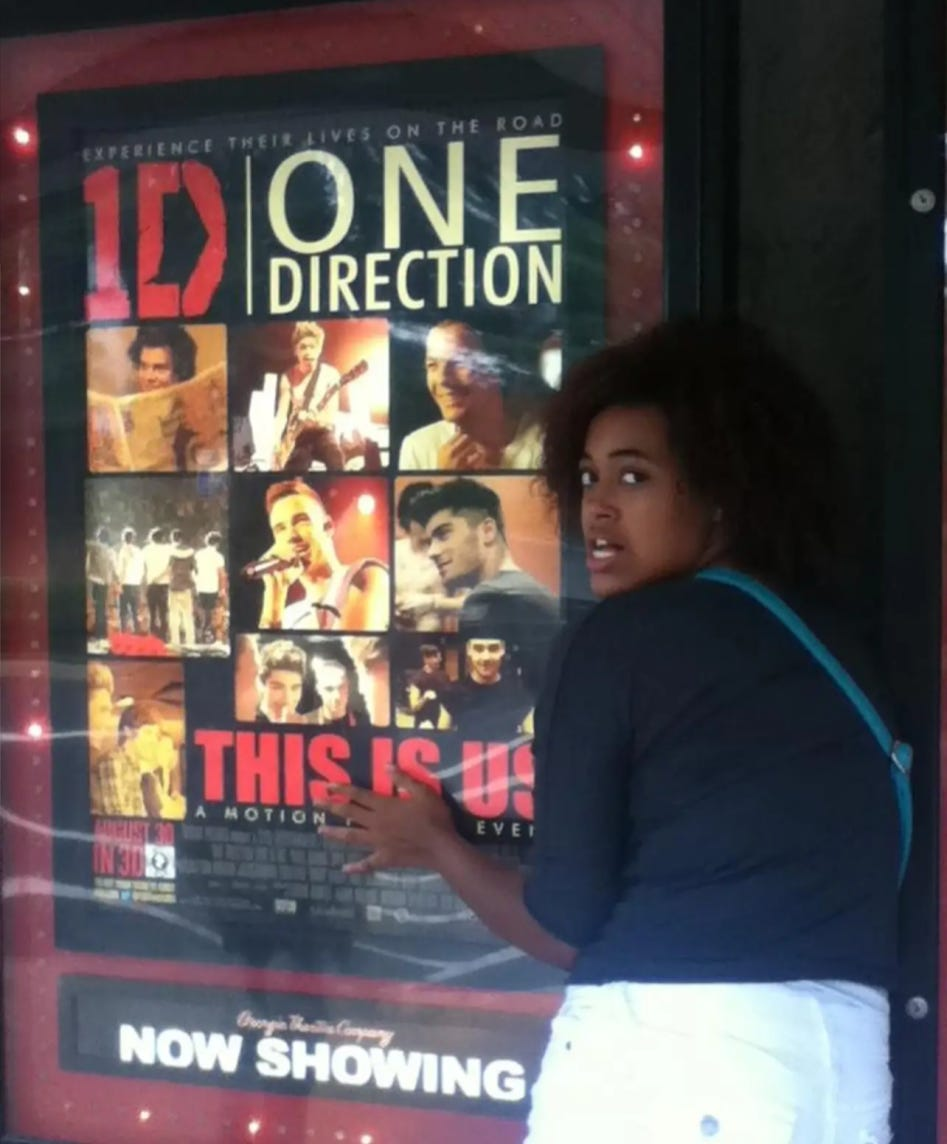
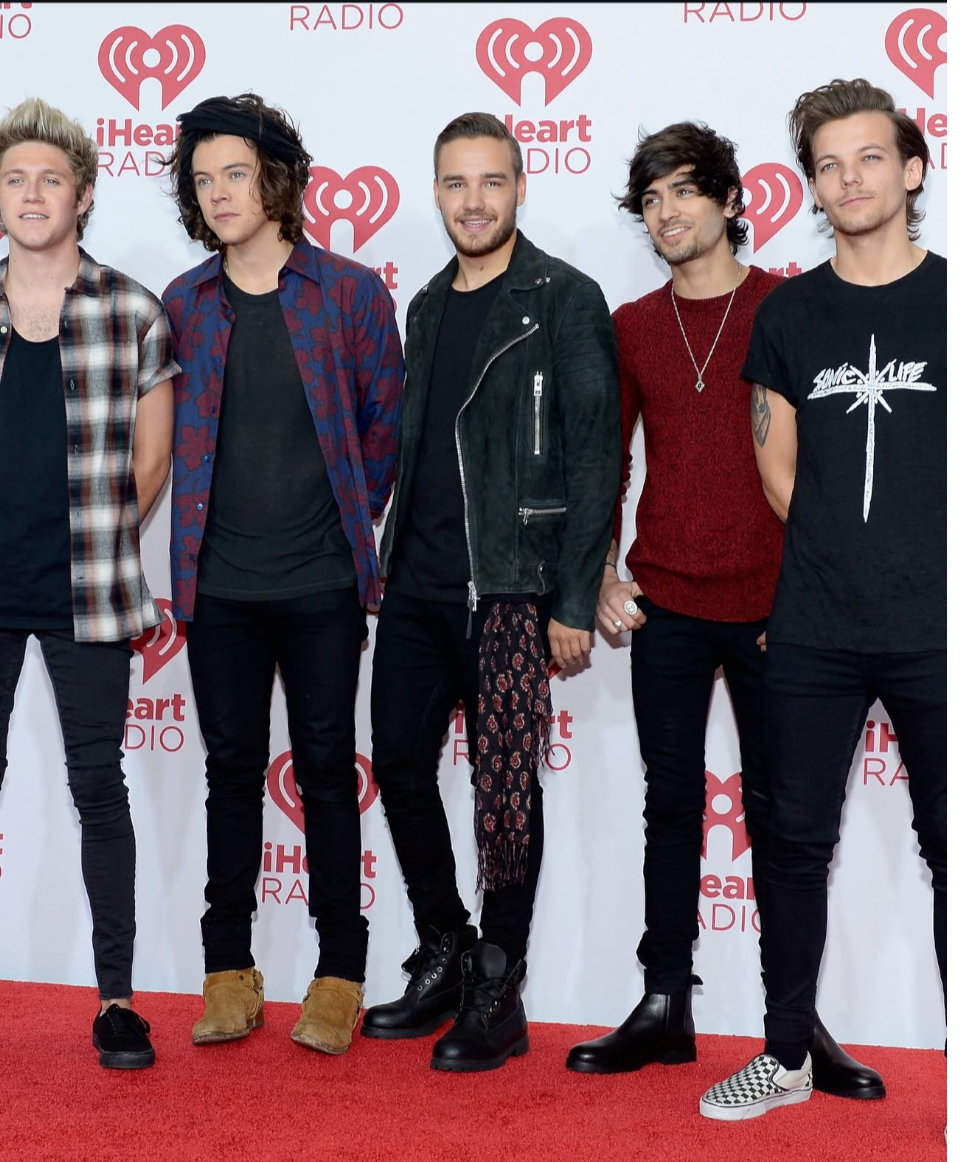
I know the feelings I had for One Direction were partly due to hormones and environment, but they should also be attributed to the band’s strategic marketing and access to the members. I was in the perfect place at the perfect time to buy in on the boyband fanfare. At the time, I truly believed that Niall, Liam, Harry, Louis, and Zayn made music just for me. Not on a specific or individual level, but spiritually. Marketing or not, it healed my soul. But fan culture has a stealthy way of creating a hierarchy that disparages fans of color. Their songs were written to be a refuge for teeny boppers worldwide, but I still felt a tinge of embarrassment when one of their songs played in public as if it were not meant for me.
“Y/n”, an acronym meaning “Your Name”, appears in many fanfics as a tool for the reader to imagine themselves in the story. Usually the author includes enough descriptors to move the story forward but not too much as to pigeonhole the character. “ y/n scooped her luscious locs into a messy bun”. “Harry stared deeply into y/n’s big blue eyes”. I knew that “your name” was never really a placeholder for my name. I knew that the sacred literature housed on Wattpad was not written with me in mind. My curls were not luscious, and I in fact, could not “scoop” them into a messy bun. I read along anyway. This begs the question: can Black children and teens access the same imagined realities of their peers? Subsequently, what is the impact of using escapism as a coping mechanism?
In the music video to their song Night Changes , they visualized the concept of fanfiction by showcasing each member on a perfect date night gone wrong. The video is shot in POV style as a nod to all the y/n’s watching, allowing fans to imagine themselves on a dream date with their favorite member. This concept is one of my favorites in their music video library; it felt like their tongue-in-cheek answer to the fans’ call. Like we shared a secret and they knew exactly what we were up to. While the identity is intentionally left off-camera, the only identifier for the mystery women in the video is their hands and arms. All of which are white. So in both the unsanctioned fanfiction and the official One Direction canon, Black women are not represented. We were relegated to the isolation of the imagination, forced to headcanon our existence in the fandom. My heart breaks a little bit every time I rewatch this video.
Online, the fandom was a community, and we rode for “our boys” simply because we believed with certainty that they would do the same for us. Was it naive, sure, but like those very boys said, hey, it’s alright if it makes you feel alive. IRL, I was ostracized and bullied by my classmates and routinely called a white girl by my own family. If a fandom is a community, then fangirling is the culture. Is there space for a subculture to emerge?
Cue Yasmine Sahid. The influencer and actress disrupts this idea, and popularly films skits poking fun at the very fandom that raised me. Her hyper-nostalgic lens on 2010s internet culture brings levity to something that, at the time I experienced it, felt so serious. Personally, it is healing to see a Black woman using fandom culture to connect others, and reliving the glory days through her eyes brings me joy. She references the lyric videos and poorly edited Tumblr graphics that are all too familiar to me. It is hilarious to me that one of the most recognisable and influential fangirls, a Black woman, does not shy away from fans like us historically being removed from the narrative. It is proof that while I was not represented, my experience was real and my Blackness was intact the whole time. I knew this all along, but being validated feels nice.
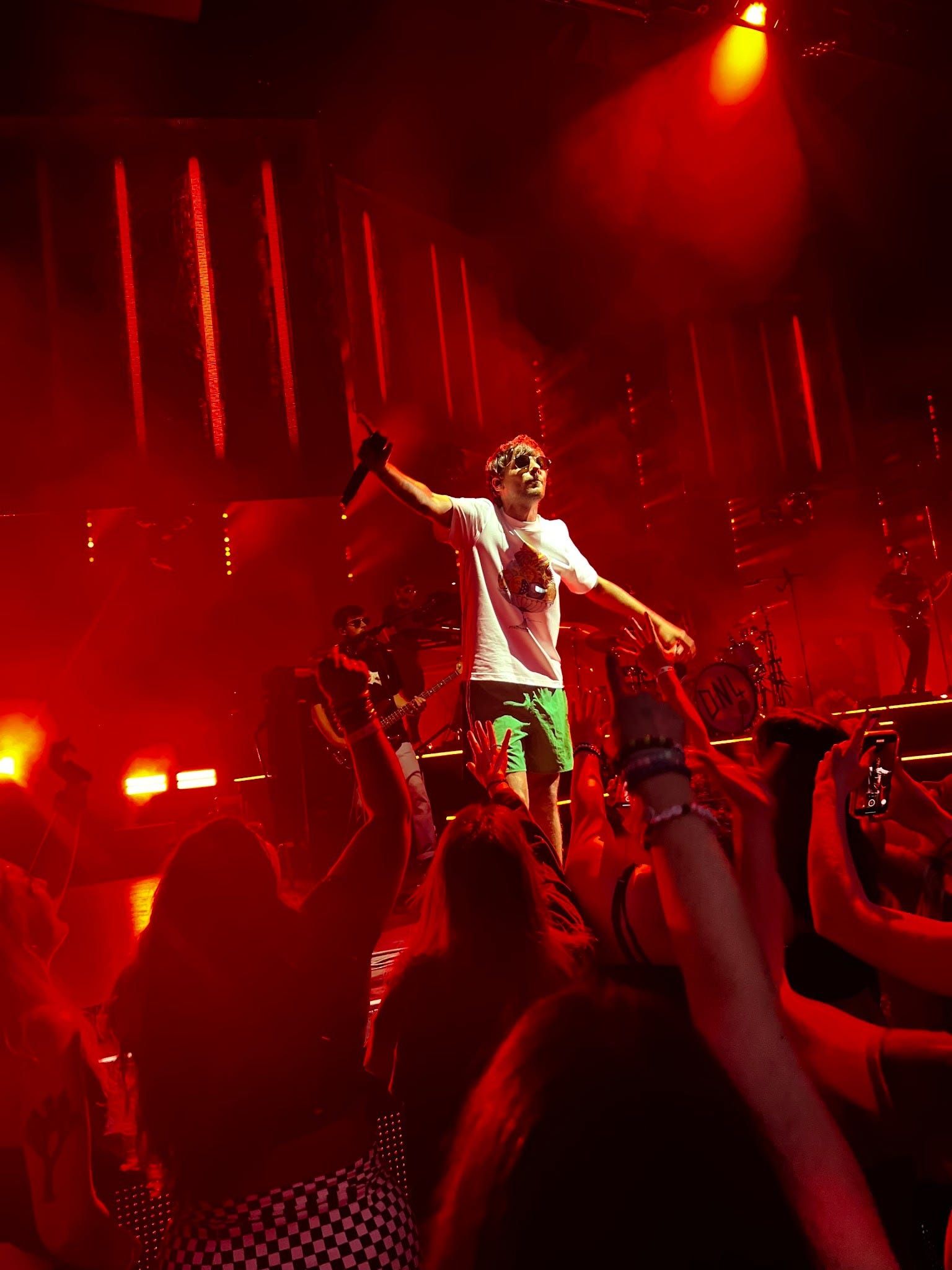
Sahid’s reenactments are a modern-day revolutionary expression of joy and nostalgia that reinforces the fact that Black identity is not a monolith. Looking back at that era reminds me that critiquing the culture is not a total rejection but an affirmation that it happened and that it mattered to me. Shamelessly, I cannot promise that I won’t bop my head when I hear a 1D deep cut in public. I am a fangirl. I will always be a fangirl, and like Harry, I too don’t know what is next for me and am excited to find out.
Recent Posts